Free Candlestick Patterns Cheat Sheet PDF Download
Mastering Japanese candlestick patterns is a fundamental requirement for visual price action analysis across Forex, stocks, and crypto markets. Our printable Free Trading Cheat Sheets PDF consolidates essential single, double, and triple candlestick formations into an easy-to-reference desktop guide. Instead of spending valuable seconds searching through textbooks during live market volatility, keep this quick reference guide nearby to identify high-probability setups instantly.
- Reversal Signals: Spot Pin Bars, Bullish/Bearish Engulfing, Morning/Evening Stars, and Hammer patterns right at key support and resistance levels.
- Continuation Signals: Recognize Rising/Falling Three Methods and Marubozu candles that signal momentum continuation.
- Indecision Markers: Identify Spinning Tops and Doji structures that signal balance between buyers and sellers prior to breakouts.
Pro Tip: Candlesticks should never be traded in isolation. Combine candlestick confirmation with customized technical indicators to validate market context and filter out false market noise.
Get every trading cheat sheet in one place
This page covers the essentials. Our cheat sheet hub has the full printable set: candlesticks, chart patterns, SMC, ICT killzones, Fibonacci, risk management, MQL5 and more. Download any sheet for free.
Chart Patterns Cheat Sheet – Reversal & Continuation Patterns
Chart patterns reflect the psychological struggle between buyers and sellers over extended timeframes. This cheat sheet organizes classical chart geometry into two primary categories: market reversals and trend continuations. Understanding these structural footprints allows traders to project clear target distances and define systematic risk levels.
- Reversal Structures: Double Tops/Bottoms, Head & Shoulders, Inverse Head & Shoulders, and Rising/Falling Wedges.
- Continuation Structures: Bullish & Bearish Flags, Pennants, Ascending/Descending Triangles, and Symmetrical Triangles.
- Measured Move Targets: Exact formulas for mapping price targets based on pattern height and breakout geometry.
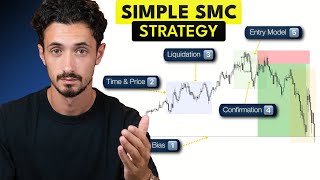
Smart Money Concepts (SMC) Cheat Sheet PDF
Smart Money Concepts (SMC) demystifies how institutional participants navigate financial markets. Transitioning from retail charting techniques to SMC requires a firm grasp of market architecture, liquidity dynamics, and institutional order placement.
- Break of Structure (BOS): Confirms trend progression when price breaks and closes beyond structural swing highs or lows.
- Change of Character (CHoCH): Signals an early structural pivot and potential trend reversal.
- Liquidity Pools: Identifying Buy-Side Liquidity (BSL) and Sell-Side Liquidity (SSL) engineered above equal highs and below equal lows.
ICT Silver Bullet Strategy & Trading Killzones PDF
Developed within the Inner Circle Trader methodology, timing is as critical as price level selection. Trading Killzones highlight windows of maximum institutional trading volume and market volatility, making execution significantly more predictable.
- London Killzone (02:00 – 05:00 EST): Ideal for capturing the daily low or high in major Forex pairs.
- New York AM Killzone (08:00 – 11:00 EST): Peak liquidity driven by US economic releases and equities market opening.
- ICT Silver Bullet Windows: Specific 60-minute algorithmic rebalancing windows (03:00-04:00, 10:00-11:00, and 14:00-15:00 EST) targeting Fair Value Gaps (FVGs).
Supply and Demand Zones & Order Blocks Cheat Sheet
Supply and Demand trading focuses on identifying institutional imbalance zones where unfilled order flow remains. Learn to mark high-probability Order Blocks and trade re-tests with precise risk control.
Key Element: High-probability order blocks always create an imbalance or Fair Value Gap (FVG) and clear opposing liquidity before initiating a strong departure move.
Forex Risk Management & Position Sizing Cheat Sheet
Capital preservation is the single most critical factor for long-term survival in financial markets. Regardless of your strategy's win rate, poor position sizing can quickly lead to account depletion during unexpected market drawdowns.
Traders who trade multiple accounts or manage funded prop firm challenges often deploy institutional setup tools and copy trading dashboards to enforce automated lot sizing, strict trade execution limits, and risk parity across master and slave accounts.
- 1% - 2% Rule: Never risk more than a fixed percentage of total equity on any individual position.
- Risk-to-Reward Ratio (RRR): Maintain a minimum 1:2 or 1:3 RRR so profitability can be achieved even with a win rate below 50%.
- Dynamic SL Scaling: Adjusting lot sizes based on stop-loss distance to ensure consistent risk across volatile market conditions.
Forex Trading Sessions & Market Hours PDF
The global Forex market operates 24 hours a day, 5 days a week, moving through four main regional sessions: Sydney, Tokyo, London, and New York. Volatility and liquidity shift significantly depending on which major financial centers are active.
- Asian Session (Tokyo/Sydney): Characterized by consolidation and range trading, ideal for range-bound strategies on AUD, JPY, and NZD pairs.
- London Session: Represents the highest trading volume, frequently setting the true directional movement for European currencies like EUR and GBP.
- London/NY Overlap (08:00 – 12:00 EST): The most volatile time of the day, producing rapid price action across all major currency pairs.
Fibonacci Retracement Levels Cheat Sheet for Traders
Fibonacci tools help traders pinpoint mathematical turning points within an established trend. By applying Fibonacci ratios to key swing highs and swing lows, traders can establish objective support, resistance, and profit-target zones.
- Key Retracement Levels: 38.2%, 50.0%, 61.8% (Golden Ratio), and 78.6% deep retracements.
- Optimal Trade Entry (OTE): The 61.8% to 79.0% zone where institutional pullbacks frequently complete.
- Fibonacci Extensions: Using 127.2%, 161.8%, and 261.8% levels to project profit targets beyond swing points.
Technical Analysis Indicators & Trading Formulas PDF
Understanding the mathematical mechanics behind technical indicators helps traders avoid common pitfalls like indicator redundancy and lagging signals.
Automating complex rules into full systematic strategies can be accomplished using automated strategies and custom Forex EAs that execute trades based on algorithmic criteria.
- Relative Strength Index (RSI): Measures price velocity to identify overbought (>70) and oversold (<30) conditions, along with bullish/bearish divergences.
- Moving Average Convergence Divergence (MACD): Combines trend-following and momentum using signal line crossovers and histogram differentials.
- Average True Range (ATR): Quantifies market volatility to systematically set dynamic stop-loss levels based on current market conditions.
MQL4 and MQL5 Programming Cheat Sheet for Expert Advisors
For algorithmic traders building Expert Advisors on MetaTrader 4 and MetaTrader 5, having essential functions and syntaxes mapped out speeds up software development and eliminates syntax errors.
For traders requiring custom code execution, specialized architecture, or strategy conversion between platform languages, professional MQL development services can help bring complex ideas to life.
- Core Event Handlers: Mastery of `OnInit()`, `OnTick()`, `OnDeinit()`, and `OnTimer()` routines.
- Trade Execution Syntax: Standard structures for `OrderSend()`, `PositionOpen()`, order modification, and trailing stops.
- Indicator Handle Calls: Fetching buffers using `iCustom()`, `iRSI()`, and `iMA()` arrays in MQL5.
Prop Firm Challenge Rules & Drawdown Management PDF
Passing funded trading account evaluations requires strict compliance with prop firm constraints. Violating maximum daily drawdown or trailing equity limits is the primary reason traders fail evaluations.
- Daily Drawdown Limits: Understanding balance-based vs equity-based drawdown calculations (typically 4% to 5%).
- Max Trailing Drawdown: Managing trailing limits as account equity reaches new peaks.
- Consistency Rules: Structuring trade volume to avoid breaching maximum lot-size or single-day profit cap rules.
Wyckoff Trading Method & Market Phases Cheat Sheet
The Wyckoff Method offers a framework for understanding how composite operators manipulate supply and demand to accumulate or distribute assets.
- Four Market Phases: Accumulation, Markup, Distribution, and Markdown.
- Accumulation Schematics: Identifying Preliminary Support (PS), Selling Climax (SC), Automatic Rally (AR), Secondary Test (ST), Spring, and Sign of Strength (SOS).
- Distribution Markers: Spotting Preliminary Supply (PSY), Buying Climax (BC), Upthrust After Distribution (UTAD), and Sign of Weakness (SOW).
How to Read Candlestick Patterns for Forex Trading
Reading candlesticks effectively requires understanding the story behind wicks and real bodies relative to overall market context.
- Wick Rejections: Long wicks extending outside of previous price ranges signal price rejection and institutional absorption.
- Body Size Dynamics: Expanding real bodies signify strong conviction, while shrinking real bodies indicate fading momentum.
- Location Context: A hammer formed at a major daily support level holds far more statistical weight than one formed mid-range.
What Is Smart Money Concepts (SMC) in Forex?
Smart Money Concepts (SMC) focuses on tracking institutional behavior rather than traditional retail chart patterns. Institutions must access large pools of liquidity to fill sizable orders without causing excessive slippage. SMC traders align their trades with these liquidity sweeps and institutional rebalancing points.
How to Calculate Forex Lot Size and Risk Per Trade
To compute your position size accurately before placing an order, utilize the standard risk formula:
Position Size (Lots) = [ Account Equity ($) × Risk Percentage (%) ] / [ Stop Loss (Pips) × Pip Value ($ per Lot) ]
Always adjust position sizes dynamically based on pair volatility and exact stop-loss distance rather than using fixed lot sizes across all asset classes.
Best Trading Chart Patterns for Beginners
Beginners should focus on chart patterns that feature clear invalidation levels and high risk-to-reward ratios.
- Double Top / Double Bottom: Simple setup providing clear entry criteria and defined invalidation points.
- Bull / Bear Flags: Excellent for entering established trends after healthy pullbacks.
- Ascending / Descending Triangles: Offers clear breakout lines where momentum traders aggregate order flow.
How to Use Free Trading Cheat Sheets Effectively
Cheat sheets serve as quick visual references to streamline trading decision-making during live market hours.
- Print or Pin: Keep essential cheat sheets on a secondary monitor or printed near your trading desk.
- Combine Models: Use higher timeframe supply/demand zones with lower timeframe candlestick confirmation for entry timing.
- Enforce Checklist Rules: Treat cheat sheets as strict operational checklists to eliminate emotional decision-making.
Frequently Asked Questions About Trading Cheat Sheets
Find quick answers to common questions about using trading cheat sheets, integrating them with automated tools, and applying price action patterns across different market conditions.